Editing
Six folders, three collections
I cut the site from 516 frames to 243 this week. Almost none of it was about the pictures being bad. It was about six folders pretending to be a body of work.
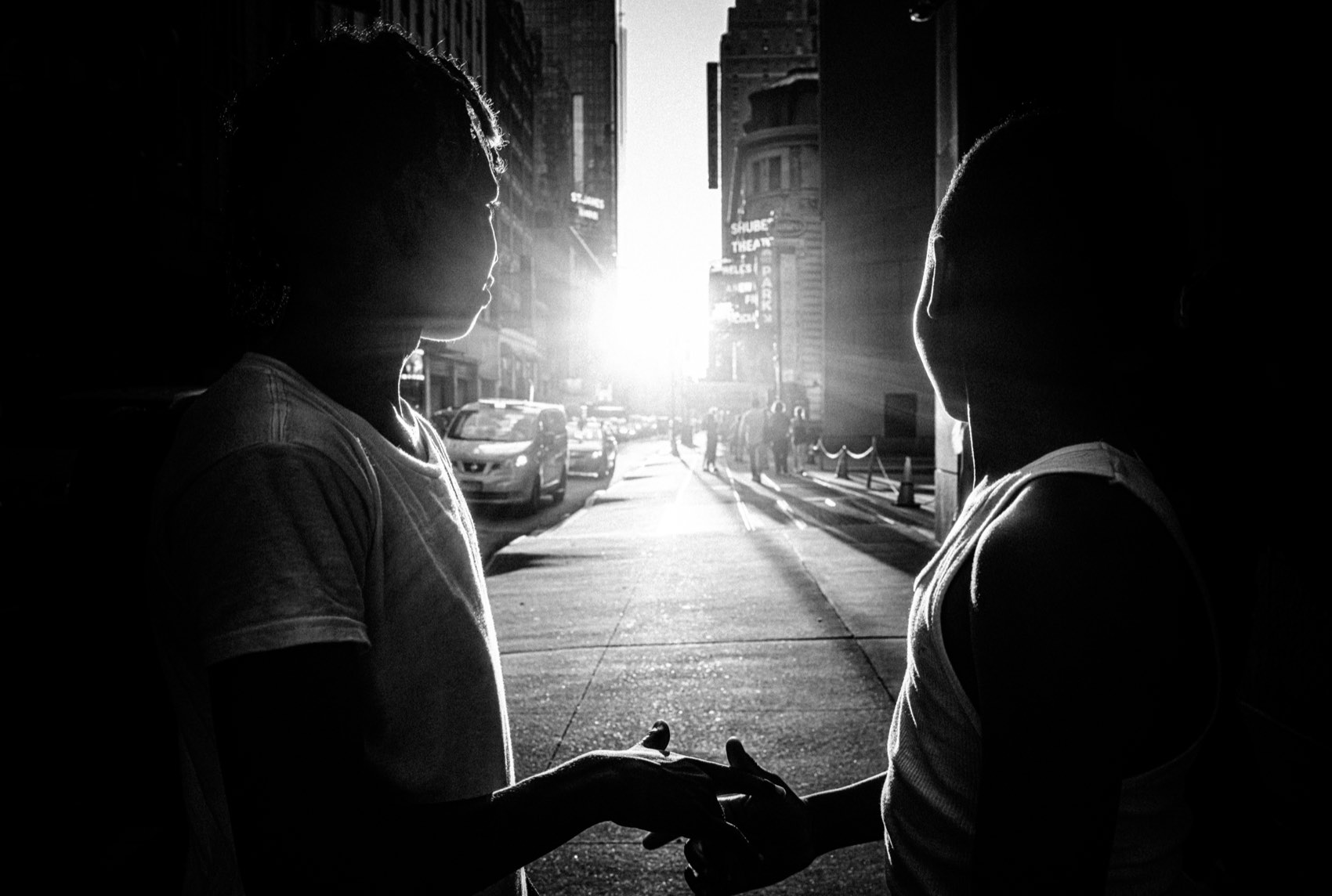
The site had six collections on it: The Wait, Into the White, Faces, Hard Lines, All at Once, Silhouettes. Five hundred and sixteen frames. On paper that reads like a body of work. In practice it read like an archive with section headings, and there is a difference.
The thing that finally made it obvious was reading the collections against their own descriptions. The Wait promised that I find a frame that already works and stand there until somebody walks into it. More than half of what was in it was close portraits of people looking straight down the lens, which is the opposite of standing still and waiting. Silhouettes had portraits in it, and shop mannequins, and the Eiffel Tower.
When the promise and the pictures disagree, the work stops reading as authored and starts reading as unsorted.
The travel folder
Hard Lines was the worst of it and the easiest to diagnose. Eighty-one frames, of which roughly forty-five were one European trip: the Duomo, the Galleria ceiling, a swan, a canal at night, ten frames of a single protest march, three near-identical frames of tourists under umbrellas. Individually there is nothing wrong with any of them. Together they answer a completely different question than the frame next to them, and that is what makes a photographer look like anyone with a camera and a plane ticket.
There were about twenty real street frames buried in that folder. Those got placed on merit into the collections where they actually belong. The rest came off.
The same man, five times
Faces was my strongest material and it was where the repeats did the most damage. One man, standing still, photographed from five angles, and all five were published. Same with a man reading a newspaper, three frames. A man in a hat, three frames. An older woman, three.
I have said before that I like a sequence, three or four frames of a moment developing in a split second. I still do. But that is a moment developing. Five angles on somebody standing still is one photograph shown five times, and the viewer knows it by the third. A sequence earns its place when the thing in front of the camera is changing. When only the camera is moving, pick one.
Three collections
What is left answers the two things I actually do. Two of them are street photography and one is street portraits.
| Collection | Before | After |
|---|---|---|
| Strangers street portraits, asked for | 84 | 78 |
| The Wait candid street, composition first | 140 | 80 |
| Towards the Light backlight, underpasses, steam | 188 | 85 |
| Hard Lines, All at Once dissolved | 104 | 0 |
| Total | 516 | 243 |
Faces became Strangers, because Faces is a category and Strangers is a description of how the picture got made: I ask, they stop, and I keep the frame right after they stop posing. Into the White folded into Towards the Light, because steam and backlight were always the same idea reached by different weather. Hard Lines and All at Once do not exist any more.
What it cost
Two hundred and seventy-three frames came off the site. A handful of them I will miss. A man under scaffolding holding a plastic bag, and a boy standing against a wall in a Chinatown alley, and both are decent photographs. They went because they were the fourth idea in a room that only supports one.
That is the part that took longest to accept. The question is not whether a frame is good. The question is whether it makes the frames around it look more certain or less. A good photograph in the wrong collection makes eighty other photographs look accidental.
And then one more
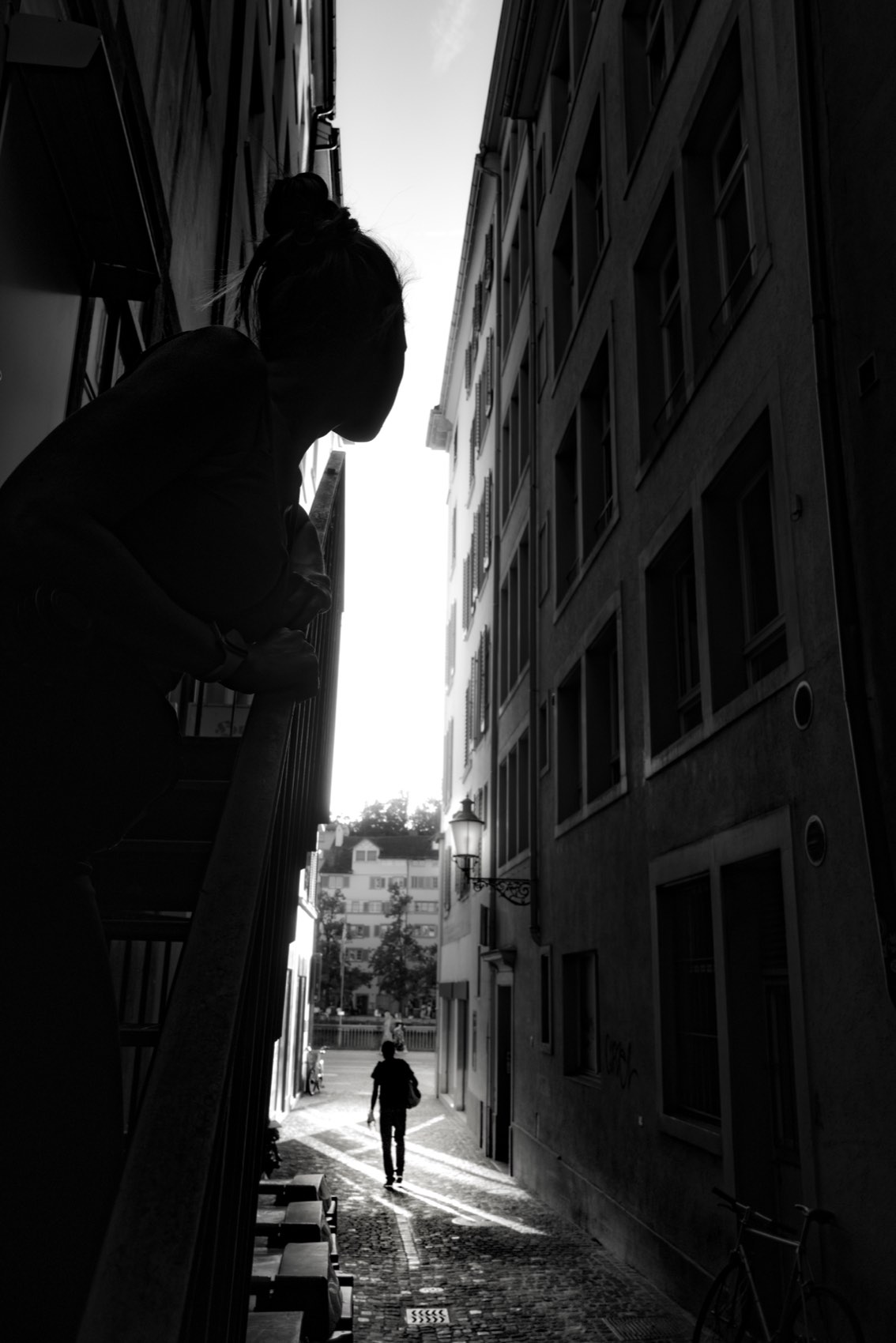
The day I finished, I opened Towards the Light and found two frames of the same Zurich alley: a woman leaning over a railing, a man walking away down the cobbles into the light. Two frames apart in one burst. I had written the rule three paragraphs above and then published the thing it forbids.
I kept the one where the walking man stands in a clean pool of light and reads as a separate shape. In the other he drifts up toward the bright opening and dissolves into it. Same alley, same second, one photograph. Eighty-five frames now, not eighty-six.
What I would tell anyone sitting on four thousand files
Read your own collection descriptions back and ask whether the pictures in them are doing what the words say. Not whether they are good. Whether they are doing that specific thing. Everything that is not doing it belongs somewhere else, or nowhere.
Then count how many times the same person appears. Then look for the trip that quietly became a collection. That is most of the edit, and none of it requires taste you do not already have.